Tuesday, December 20, 2016

Betaine Hydrochloride: How it helps with Digestion & Detoxification

by Dr. Edward Group DC, NP, DACBN, DCBCN, DABFMPublished on , Last Updated on 

red organic beets
Betaine Hydrochloride is an organic compound and vitamin-like substance found in many different foods such as sugar beets, grains and spinach. It is currently being recommended by both naturopaths, as well as medical doctors, as a supplemental source of hydrochloric acid in the stomach.
Studies [1] show that this compound can profoundly benefit individuals suffering from digestive upsets such as hypochlorhydria, a deficiency of stomach acid production.
Normally, healthy stomachs can produce enough gastric acid to kill off harmful organisms. But when people experience deficiencies in producing stomach acid, they are more likely to have bacterial and intestinal infections, as well as the increased presence of harmful organisms [2].
Betaine HCL also has the ability to help the stomach to break down fats and proteins in the food we eat. It also assists the general detoxification processes in the body. It is an essential component for metabolizing and absorbing food, and is particularly needed for assimilating proteins, vitamin B12, calcium, and iron.

The Action of Betaine Hydrochloride

The chemical betaine is absorbed in the digestive tract into what are known as enterocytes. These enterocytes are then circulated into the liver, where the betaine can then be extracted and metabolized. From there, betaine hydrochloride is then changed into betaine inside the alkaline environment of the small intestine, creating a favorable environment for digestion.

The Health Benefits of Betaine HCL

organic beets
Betaine hydrochloride is a powerful digestive aid for people who may have been privy to a poor diet, prolonged dehydration and generalized stress. It has also been shown to offer digestive support to perimenopausal women and elderly individuals.
Betaine HCL has also been found to be beneficial in treating hypochlorhydria, a deficiency of stomach acid production. It is also a crucial compound in balancing homocysteine levels, a condition related to severe heart disease.
What is more, as we age, the body naturally produces less digestive enzymes. Due to this lowering in enzymatic activity, Betaine HCL levels also decrease. Depending on the individual, this can lead to sluggish digestion and poor mineral and nutrient absorption.
It also means that the body is not detoxifying itself in an optimal fashion. Things that the body would normally expel remain lodged in the system. This leads to toxic overload, and the type of redness related to chronic disease.
Many people facing poor digestion have found that taking a vegetarian form of plant derived Betaine HCL before meals aids them in their own digestive process, as well as metabolizing the food they consume.

Other conditions for which Betaine HCL may help include:

  • Acne
  • Skin disorders
  • Diarrhea
  • Gallstones
  • Stomach ulcer
  • Chronic hives
  • Food sensitivities
  • Thyroid function
  • Inner ear infections
  • Iron-deficiency anemia
  • Candida & Yeast infections
  • Stomach or esophageal disorders
  • General malabsorption of nutrients
  • General indigestion and heart burn
  • Acetaminophen-induced liver toxicity
  • Gastroesophageal reflux disease (GERD)
  • Arteriosclerosis (hardening/loss of elasticity in the arteries)
Betaine HCL Supplement

How To Get More Betaine HCL

If you are considering taking a Betaine HCL supplement, it should not contain fillers or additives of any kind. Taking a high-quality Betaine Hydrochloride (HCL) supplement can help improve digestion, as well as aid in the absorption of many essential vitamins and nutrients.

References:

  1. Sugimoto K, Makihara T, Saito A, Ohishi N, Nagase T, Takai D. Betaine improved restriction digestion. Biochem Biophys Res Commun. 2005 Dec 2;337(4):1027-9. Epub 2005 Oct 3.
  2. . 5 Common Intestinal Parasites in Humans. Parasite Cleanse Resource Center. 2009 June 10.


Gallbladder Symptoms, Causes of Pain & Risk Factors

Gallbladder symptoms - Dr. Axe
In one way or another, gallbladder pain is almost always caused by one particular gallbladder problem: gallstones. Around 10 percent to 20 percent of the total adult population (up to 40 percent in some age groups) is believed to have at least mild to moderate gallstones. The incidence of gallbladder symptoms rises with age, so those over 60 are most susceptible. (1)
Woman over 40 develop gallstones most often, and therefore compared to men they’re more likely to deal with recurrent gallbladder symptoms, such as abdominal pain, back pain and indigestion. Most of the time gallbladder symptoms are due to the formation of small “stones” formed from cholesterol, calcium and other particles that bind to each other and can become lodged inside the gallbladder.
Another serious gallbladder problem is cholecystitis, or inflammation of the gallbladder. The Merk Manuals Medical Dictionary states that cholecystitis is usually caused from a gallstone blocking the cystic duct, which carries bile from the gallbladder. It typically causes strong to very severe abdominal pain that lasts for six hours or more, sometimes accompanied by other symptoms like a fever and nausea. (2)
Several factors can increase your risk for developing gallstones and other gallbladder symptoms, such as cholescystitis. Factors including the quality of your diet, your weight, age, gender and genetics all influence the health of your digestive organs. Several life circumstances that most people don’t realize can contribute to gallbladder troubles are pregnancy, “crash dieting” resulting in rapid weight loss, a lack of exercise/sedentary lifestyle and having low HDL “good” cholesterol.

Why Do We Have a Gallbladder?

The gallbladder is a small organ in the shape of a “sac” that has the primary role of storing bile that’s made in the liver. As part of the digestive system, the gallbladder helps communicate back and forth to other organs in order to perform functions, such as enzyme production and storage, chemical reactions that break down foods into nutrients, and elimination of waste.
The gallbladder sits just under the liver, and the two organs have a close working relationship. The primary need for the gallbladder storing and recycling excess bile is so bile can be reused for the digestion of future meals. Bile helps enzymes in the body break down fats into fatty acids. Once bile is made in the liver, it travels to the gallbladder through a channel called the cystic duct. The gallbladder stores bile between meals so when we eat bile can be squeezed through the bile duct as needed and used to break down food before it makes its way to the intestines.
If the gallbladder becomes inflamed, surgery to remove the organ is sometimes a last-resort option to prevent rupturing. Following removal, the gallbladder is not actually needed for survival or digestion because bile can be made to flow from the liver right into the small intestines. Therefore the gallbladder is said to be a nonessential organ. (3)

Signs of Gallbladder Problems and Gallbladder Symptoms

Whether your gallbladder pain is due to gallstones or another cause, symptoms likely include: (4)
  • Pain in the abdomen and back
  • Sometimes severe shooting pains, especially when pressing on the upper right part of the abdomen. Severe pain can also spread outward to the lower back, right shoulder blade or tops of the thighs
  • Tenderness and swelling over the gallbladder
  • Stiffness over the gallbladder and trouble moving or twisting from the abdomen
  • Nausea, loss of appetite and sometimes vomiting
  • Trouble breathing
  • Sometimes symptoms of a fever, such as muscle stiffness, weakness, fatigue, dizziness and chills. Fever affects those with acute gallbladder inflammation most often but rarely occurs in people with chronic cholecystitis
Gallstone Symptoms
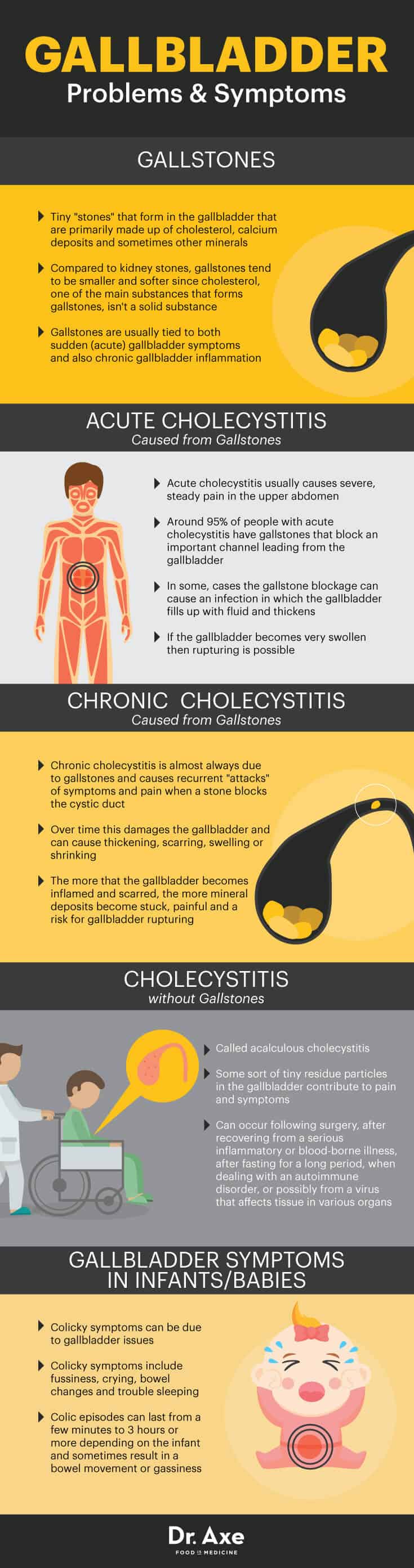
Gallstones are tiny stones that form in the gallbladder that are primarily made up of cholesterol, calcium deposits and sometimes other minerals. Compared to kidney stones, gallstones tend to be smaller and softer (almost like sludge or sand) since cholesterol, one of the main substances that forms gallstones, isn’t a solid substance. Gallstones are usually tied to both sudden (acute) gallbladder symptoms and also chronic gallbladder inflammation.
Cholecystitis Symptoms Caused from Gallstones
Inflammation of the gallbladder can be either acute (beginning suddenly and typically lasting for a shorter time) or chronic (develops over time and causes persistent symptoms long term).
Acute cholecystitis usually causes severe, steady pain in the upper abdomen. Research shows that around 95 percent of all people with acute cholecystitis have gallstones that block an important channel leading from the gallbladder. In some cases, the gallstone blockage can cause an infection in which the gallbladder fills up with fluid and thickens. If the gallbladder becomes very swollen, rupturing is possible, which is why emergency surgery is sometimes needed.
Chronic cholecystitis is almost always due to gallstones and causes recurrent attacks of symptoms and pain when a stone blocks the cystic duct. Over time, this damages the gallbladder and can cause thickening, scarring, swelling or shrinking. The more the gallbladder becomes inflamed and scarred, the more mineral deposits (such as calcium) become stuck, painful and a risk for gallbladder rupturing.
Cholecystitis without Gallstones
Although most cases of gallbladder inflammation are due to gallstones, sometimes gallstones aren’t present — this is called acalculous cholecystitis. Even when gallstones aren’t detected, most patients with gallbladder inflammation have some sort of tiny residue particles in their gallbladders that contribute to pain and symptoms. Other situations where gallbladder pain can develop even without gallstones are following surgery, after recovering from a serious inflammatory or blood-borne illness, after fasting for a long period (not eating), when dealing with an autoimmune disorder, or possibly from a virus that affects tissue in various organs.
Gallbladder Symptoms in Infants/Babies
A report published in the Journal of Clinical Gastroenterology states that in infants, colicky symptoms can sometimes be an important indication of gallbladder problems or related symptoms affecting the liver. (5) Colicky symptoms include fussiness, crying, bowel changes and trouble sleeping.
Colic episodes can last from a few minutes to three hours or more depending on the infant and sometimes result in a bowel movement or gassiness. While colic isn’t always tied to gallbladder or liver problems, it’s been found that babies with colic tend to have indigestion in common. Babies and young children are also at a higher risk for acquiring viruses or infections that can cause gallbladder inflammation, especially when they have weak immune systems.

Gallbladder symptoms and problems - Dr. Axe


Causes and Risk Factors for Gallbladder Symptoms

Factors like stress, a poor diet and obesity are tied to gallbladder problems because these can contribute to inflammation or may cause dangerous visceral fat to form around the digestive or vital organs. Obesity has been shown to contribute to higher levels of cholesterol in the liver and can contribute to many different digestive dysfunctions. Visceral fat associated with gallstones is often visible just from looking at someone’s extended waist.
Other causes and risk factors for developing gallstones or gallbladder disease are: (6)
  • Consuming a poor diet and/or suffering from nutrient deficiencies
  • Fasting, crash dieting or losing weight rapidly in other ways
  • Pregnancy and experiencing other hormonal changes
  • The use of birth control pills/oral contraceptives
  • Diabetes
  • Having high triglyceride levels (a type of fat in the blood)
  • Having low HDL cholesterol
  • A sedentary lifestyle/lack of physical activity
  • Having a family history of gallstones or other gallbladder symptoms
  • A history of autoimmune disease, viruses or infections that hinder the immune system

Conventional Treatments for Gallbladder Symptoms (Including Gallbladder Surgery)

If signs of severe cholecystitis gallbladder inflammation are detected, especially when attacks keep coming back, many doctors choose to remove the gallbladder. Gallbladder removal surgery is called cholecystectomy, which is performed either invasively or noninvasively. The gallbladder is typically removed through surgery using a laparoscope.
The trouble with gallbladder surgery (whether to remove gallstones or the organ itself) is that usually it won’t actually fix the underlying problem causing pain and other symptoms, nor will removal of stones necessarily prevent future ones from forming. Gallstones can be removed nonsurgically with certain medications in some cases, but it’s been shown they often don’t work long term without other lifestyle changes. Plus, gallstones typically wind up developing again within five years after nonsurgical treatment, especially when factors like poor diet and impaired immunity are not addressed.

Natural Treatments for Gallbladder Problems

1. Stick to an Anti-Inflammatory Gallbladder Diet 
A gallbladder diet involves consuming mostly plant foods and other unprocessed products in order to manage your weight, balance hormones and reduce inflammation. Just avoid cutting calories too low, since research shows yo-yo dieting or fad-dieting (causing people to lose more than three pounds per week) might increase the chance of getting gallstones.
Eat more probiotic foods and high-fiber foods (aim for 30–40 grams of fiber per day), including cultured yogurt/kefir, avocado, leafy greens, tomato, sweet potato, bananas, beets, artichoke and dandelion greens. Focus on unrefined healthy fats, including olive or coconut oil, sprouted nuts and seeds. Consume clean and lean protein like pasture-raised chicken, turkey, grass-fed beef, bison, wild-caught fish and organic protein powder, including that from bone broth.
Gallbladder problem foods to avoid include fried foods and hydrogenated oils, fast foods, lunch/deli meats, convenience foods like chips or cookies, salami and other cured meats, pork products, added sugar, processed dairy, and conventional grain-fed animal meat. High-fat meals can potentially worsen gallbladder issues, so consuming healthy fats in moderation is important.
2. Exercise
Regular exercise may help protect against gallstones because physical activity is beneficial for hormonal balance, reducing inflammation, overall digestive health and maintaining a healthy weight. (7) Aim for about 30–60 minutes of moderately intense exercise each day.
3. Balance Hormones Naturally
According to the National Foundation of Diabetes, Digestive and Kidney Diseases, the female sex hormone estrogen might be the reason why gallstones are more common among women than men. Estrogen dominance is a problem among men too, however, especially when they consume a poor diet and are overweight. You can help balance hormones naturally with exercise, stress reduction, avoiding chemical/toxin exposure and a healthy diet.

Gallbladder issues by the numbers - Dr. Axe

4. Check Your Medications
If you currently take medications, including oral contraceptives (birth control pills), hormone replacement drugs or cholesterol medications, then discuss with your doctor whether these might contribute to your gallbladder problems.
5. Consider Supplements 
Natural supplements that may be able to help treat gallbladder symptoms and prevent attacks include milk thistle, turmeric, bile salts, dandelion root, lipase enzymes and rosemary essential oil.

Facts and Figures Regarding Gallbladder Symptoms

  • Approximately 10 percent to 20 percent of the total adult population (or more) is believed to have gallstones. In those who develop acute gallbladder inflammation, at least 95 percent have gallstones.
  • Gallbladder symptoms, including gallstones, are most common in women, adults over the age of 40, and anyone who is overweight or obese — 10 percent to 15 percent of men over 60 years old and 20 percent to 40 percent of women of the same age have gallstones.
  • During a gallbladder attack, abdominal pain usually lasts about six to 12 hours but might persist longer. Gallbladder pain normally peaks 15–60 minutes after starting and then remains constant until the episode is over.
  • Most gallbladder attacks cause pain to come and go over the course of two to three days. In most cases, pain should go away within about one week but often returns at a later time if underlying causes of gallstones aren’t treated.
  • Gallstone surgery or surgery to remove an inflamed gallbladder are some of the most commonly performed surgeries in industrialized nations, with more than 750,000 surgeries performed every year to remove gallstones in North America alone.
  • Gallbladder surgery is usually performed within 24 to 48 hours after symptoms start if serious inflammation is detected. If untreated, the type of gallbladder inflammation called acalculous cholecystitis results in death for about 65 percent of people. This disorder can cause serious complications, including rupturing.

Precautions Regarding Gallbladder Problems

Although gallstones usually aren’t life-threatening and commonly only cause short-term pain, sometimes symptoms can become very severe and dangerous. Acalculous cholecystitis is the most dangerous type of gallbladder problem, typically causing sudden, excruciating pain in the abdomen, high levels of gallbladder inflammation, and sometimes rupturing of the gallbladder.
Always seek help from a doctor or head to the emergency room if you suspect you have gallstones or display symptoms of acalculous cholecystitis. Leaving this condition untreated can cause someone to become very ill and even die. Look for any of the following signs of complications, and let your doctor know right away if you notice these symptoms worsening:
  • Increasingly severe pain
  • High fever and chills
  • High amounts of bloating and swelling over the gallbladder, caused from pockets of pus (abscesses) or a tear (perforation)
  • Jaundice, including yellowing of the skin (caused from a backup of bile in the liver called cholestasis)
  • Passing dark urine and light-colored stools

Final Thoughts on Gallbladder Symptoms 

  • Gallbladder symptoms, including gallstones, are a common problem among adults over 40, especially those who are overweight, eat a poor diet, and have existing hormonal imbalances or cholesterol problems.
  • Symptoms of gallstones or gallbladder disease/inflammation include abdominal pain that’s sometimes severe and occurs in attacks, back pain, fever, tenderness and swelling over the gallbladder, and nausea.
  • Natural ways to prevent and treat gallbladder symptoms are eating an unprocessed diet (high in fiber, antioxidants and electrolytes), maintaining a healthy weight and heart, adjusting medications, and exercising.

Read Next: The Gallbladder Diet and Natural Treatment Protocol

Josh Axe
Dr. Josh Axe is on a mission to provide you and your family with the highest quality nutrition tips and healthy recipes in the world...Sign up to get VIP access to his eBooks and valuable weekly health tips for FREE!
10 Black Pepper Essential Oil Benefits You Won’t Believe
Black pepper essential oil - Dr. Axe
Black pepper is one of the most widely used spices on the planet. It’s valued not only as a flavoring agent in our meals, but also for a variety of other purposes, such as medicinal uses, as a preservative and in perfumery. In recent decades, research has explored the many benefits of black pepper essential oil and its major active principle, piperine, which has the ability to enhance the digestive system and protect us against oxidative damage. (1)
That’s not all the oil of this common spice can do. Black pepper essential oils benefits include relieving aches and pains, lowering cholesterol, detoxing the body and enhancing circulation, among many more.

10 Black Pepper Essential Oil Benefits

1. Relieves Aches and Pains
Because of its warming, anti-inflammatory and antispasmodic properties, black pepper oil works to reduce muscle injuries, tendonitis, and symptoms of arthritis and rheumatism.
A 2014 study published in the Journal of Alternative and Complementary Medicine assessed the efficacy of aromatic essential oils on neck pain. When patients applied a cream composed of black pepper, marjoram, lavender and peppermint essential oils to the neck daily for a four-week period, the group reported improved pain tolerance and significant improvement of neck pain. (2)
2. Aids Digestion
Black pepper oil may help ease the discomfort of constipation, diarrhea and gas. A range of studies has shown that it exhibits antidiarrheal, gastro-protective, antidiarrheal and antispasmodic activities. (3) Black pepper does this by stimulating the stomach to increase hydrochloric acid secretion, which is necessary for proper digestion. Black pepper has been used to effectively treat IBS symptoms as well as bladder dysfunctions. (4)
3. Lowers Cholesterol 
A 2002 study on the hypolipidemic (lipid-lowering) effect of black pepper in rats fed a high-fat diet showed a decrease in the levels of cholesterol, free fatty acids, phospholipids and triglycerides. Researchers found that supplementation with black pepper elevated the concentration of HDL cholesterol and reduced the concentration of LDL cholesterol and VLDL cholesterol in the plasma of rats fed high-fat foods. Use black pepper essential oil internally to reduce high triglycerides and improve your total cholesterol levels. (5)
4. Has Antiviral Properties
The long-term use of antibiotics has resulted in the evolution of multi-drug-resistant bacteria. Research published in Applied Microbiology and Biotechnology found that black pepper extract contains anti-virulence properties, meaning it targets bacterial virulence without affecting cell viability, which may be less prone to the development of drug resistance. The study showed that after screening 83 essential oils, black pepper, cananga and myrrh oil inhibited staphylococcus aureus biofilm formation and almost abolished the hemolytic (destruction of red blood cells) activity of S. aureus. (6)
5. Encourages Circulation
When black pepper essential oil is taken internally, it promotes healthy circulation and stimulates mucus and bile flow. It has warming properties when taken internally and applied topically. Mix black pepper oil with cinnamon or turmeric essential oil to enhance these circulatory activities. (7)

Black pepper essential oil benefits and uses - Dr. Axe

6. Exhibits Anticancer Activity
According to a 2010 study conducted at Michigan State University, black pepper oil and its constituents exhibit anti-inflammatory, antioxidant and anticancer activities. All compounds derived from black pepper suppressed human cancer cell proliferation, with peperine being the most effective compound. (8)
7. Eases Feelings of Anxiety and Cigarette Cravings
Black pepper oil may help reduce cravings for cigarettes and symptoms of anxiety in smokers deprived from smoking. A 1994 study published in Drug and Alcohol Dependence found that black pepper oil can suppress certain smoking withdrawal symptoms, including cravings for cigarettes. Forty-eight cigarette smokers participated in a three-hour session conducted after overnight deprivation from smoking. The participants were divided into three groups: One group of smokers puffed on a device that delivered a vapor from black pepper essential oil, a second group puffed on a device with a mint/menthol cartridge and a third group used a device containing an empty cartridge. After puffing and inhaling from the devices throughout the session, reported cravings for cigarettes were significantly reduced in the black pepper group relative to each of the two control groups.
In addition, negative effects and symptoms of anxiety were alleviated in the black pepper, and participants reported that the intensity of sensations in the chest was significantly higher with the black pepper cartilage. This study suggests that respiratory tract sensations are important in alleviating smoking withdrawal symptoms and cigarette substitutes delivering black pepper constituents may prove useful in smoking cessation treatment. Black pepper oil is also among the best essential oils for anxiety and nervous conditions. (9)
8. Helps Detoxify the Body
Black pepper oil creates a warming sensation when applied topically, so it increases sweating. It also serves as a diuretic and increases urination, helping remove bodily toxins and excess water from the body. This reduces swelling and inflammation; plus it can help lower blood pressure naturally. (10)
A 2013 study published in Cell Biochemistry and Biophysics found that piperine supplementation helped normalize blood pressure, improve glucose tolerance (giving you normal blood sugar levels), reduce inflammation and improve liver function in rats fed a high-fat diet. These changes clearly suggest that peperine reduces symptoms of human metabolic syndrome by helping the body to remove toxins and reduce inflammation. (11)
9. Serves as an Appetite Stimulant
Research shows that olfactory stimulation using black pepper essential oil, which is a strong appetite stimulant, can facilitate swallowing in people with neurological disorders. Inhalation and ingestion of black pepper oil activates the insular or orbitofrontal cortex, resulting in improvement of the reflexive swallowing movement.
In 2008, the effects of olfactory stimulation with black pepper oil were investigated in pediatric patients receiving long-term enteral nutrition (feeding with liquid supplements or tube feeding) due to neurological disorders. In eight out of 10 patients, black pepper oil intervention was continued for three months, and five patients showed increases in the amount of oral intake — plus black pepper treatment helped facilitate swallowing movement. (12)
10. Can Be Used as Food Preservative
Black and green pepper essential oils were used in a 2015 study in order to determine the antimicrobial activity against food spoilage when added to chicken soup. Researchers found that black pepper oil displayed antimicrobial, antifungal and antibacterial activity, and it successfully inhibited the growth of bacteria in chicken soup. The results of this study reveal that both green pepper and black pepper essential oils are efficient in controlling the growth of known food-spoilage microorganisms. (13)

How to Use Black Pepper Oil

Black pepper essential oil is available in some health food stores and online. A 10-milliliter bottle costs between $10 and $15. Black pepper oil can be inhaled directly from the bottle, diffused at home for a warming aroma, taken internally in small doses and applied topically.
When taking black pepper oil internally, be sure to purchase a high-quality, 100 percent pure-grade product that’s made by a trustworthy and reputable company. Because of its potent and medicinal properties, you want to use the best product you can find.
When applied topically, black pepper oil creates a warming sensation, so use small doses and dilute it with a carrier oil, like coconut oil, jojoba oil or almond oil. Use a 1:1 dilution, especially if you apply the oil to sensitive skin.
There are so many ways to use black pepper essential oil, and its uses go far beyond flavoring your food. Here are some easy ways to use black pepper oil at home:
  • To increase circulation and blood flow to the muscles and nerves, add 3–5 drops of black pepper oil to a warm compress and apply to the abdomen or areas of concern.
  • To ease the discomfort of constipation, diarrhea and gas, take 1–2 drops of black pepper oil internally by adding it to a smoothie, soup or savory dish. It can also be applied topically to the abdomen.
  • To relieve muscle injuries and tendonitis, apply black pepper oil topically to the area of concern.
  • To aid respiratory conditions, take internally or inhale the oil directly from the bottle.
  • To relieve congested airways, apply 2–3 drops topically to the chest.
  • To reduce cigarette cravings, diffuse black pepper oil or inhale it directly from the bottle when having a craving.
  • To use it as a natural treatment for arthritis and rheumatism, apply 2–3 drops topically to the area of concern.
  • To help detoxify the body, take 1–2 drops internally or apply 2–3 drops topically to the bottoms of the feet.
  • To add flavor to soups, stews, baked vegetables, salads and entrees, add 1–2 drops of black pepper essential oil.

Black Pepper Essential Oil Plant Origin and Chemical Composition

Black pepper essential oil is extracted through steam distillation. The essential oil has a spicy, warm, peppery and musky aroma. It’s commonly used to aid the digestive and nervous systems — stimulating circulation and promoting emotional balance. Black pepper possesses a unique versatility that’s both energizing and warming. In addition to invigorating the senses, it can be used to enhance mental clarity, and it’s a favorite among athletes and those with active lifestyles because it has warming and energizing properties.
Black pepper essential oil is also an important health food due to its antioxidant, antimicrobial potential and gastro-protective modules. With piperine as an active ingredient, black pepper holds rich phytochemistry that also includes volatile oils, oleoresins and alkaloids. Piperine assists in cognitive brain functioning, boosts nutrient absorption and improves gastrointestinal functionality. Research has also found that the free-scavenging activity of black pepper and its active ingredients might be helpful as a chemoprotective agent and in controlling the progression of tumor growth. (14)
Archaeological evidence of pepper use goes back to at least 2000 B.C. in India. References to pepper appear in Greek and Roman texts, suggesting an ancient trade between India and the West. The Romans loved adding pepper to their food; in fact, in the oldest known cookbook in existence, 80 percent of the recipes contain the spice. Signs of an ancient pepper trade from India to Egypt have also been found, including peppercorns that had been stuffed into the nostrils of Ramses the Great when he was mummified.

Black Pepper Essential Oil Precautions

Black pepper essential oil can be a strong irritant in high doses, so dilution with a carrier oil (like coconut or jojoba oil) is recommended for topical use. It’s smart to try a patch test before applying black pepper oil to a larger area of your body. Start by applying a drop to your wrist or foot to make sure you won’t have an adverse reaction.

Final Thoughts on Black Pepper Essential Oil

  • Black pepper essential oil has a spicy, warm, peppery and musky aroma. It’s commonly used to aid the digestive and nervous systems — stimulating circulation, promoting emotional balance, stimulating appetite and reducing cholesterol levels.
  • Use black pepper essential oil to aid digestion and respiratory conditions, help detoxify the body, and add flavor to your food.
  • One of the mot well-researched benefits of black pepper oil is its ability to help you quit smoking. The warming sensation black pepper oil creates in the throat and chest when inhaled has proved to help people quit smoking more easily. Black pepper oil also helps ease anxiety and nervousness when inhaled or diffused.
  • If you use black pepper oil topically, dilute it with a carrier oil first because it can be a strong irritant.

Read Next: 11 Benefits of Melissa Essential Oil

Josh Axe
Dr. Josh Axe is on a mission to provide you and your family with the highest quality nutrition tips and healthy recipes in the world...Sign up to get VIP access to his eBooks and valuable weekly health tips for FREE!

Get FREE Access!

Free eBook to boost
metabolism & healing
30 Gluten-Free Recipes
& detox juicing guide
Shopping Guide & 
premium newsletter