Wednesday, January 31, 2018

“Don’t Call Me Mother,” Artificial Womb Grew Baby Sheep, Humans Next
By Heather Callaghan, Editor
Pre-term sheep spent four weeks in external, artificial wombs, that only Ziploc and Stanley Kubrick could be proud of. Are humans next?
The near future is heralded by the symbolic gesture of sacrificial lambs to the God of Science & Technology.
The Verge reports:
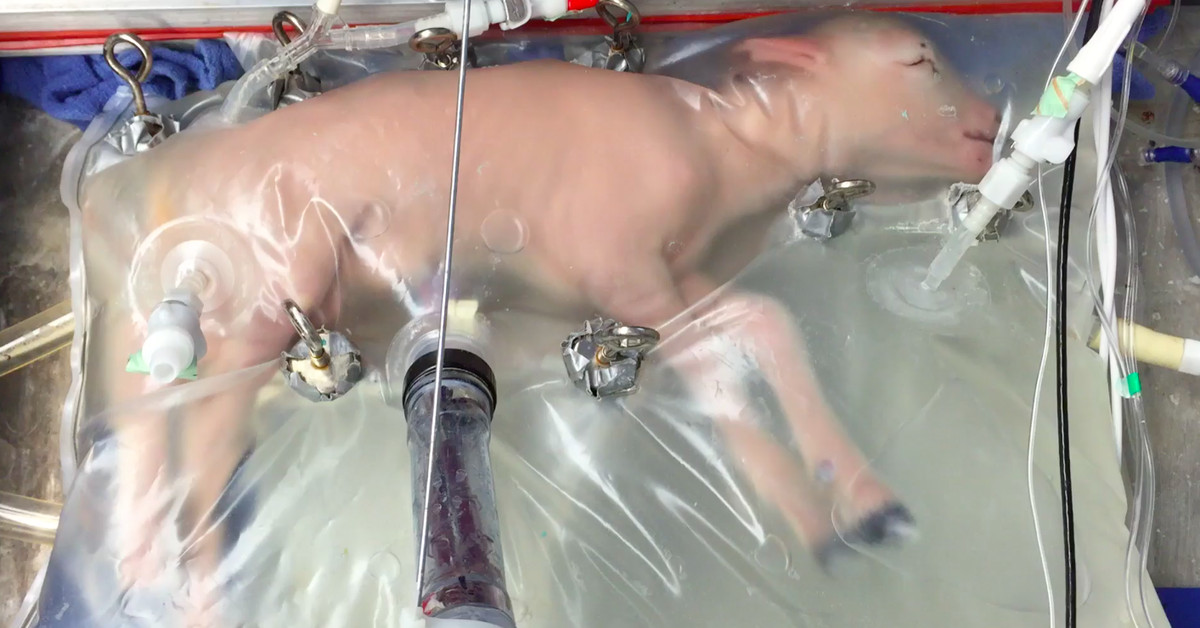
Inside what look like oversized ziplock bags strewn with tubes of blood and fluid, eight fetal lambs continued to develop — much like they would have inside their mothers. Over four weeks, their lungs and brains grew, they sprouted wool, opened their eyes, wriggled around, and learned to swallow, according to a new study that takes the first step toward an artificial womb. One day, this device could help to bring premature human babies to term outside the uterus — but right now, it has only been tested on sheep.
It’s appealing to imagine a world where artificial wombs grow babies, eliminating the health risk of pregnancy. But it’s important not to get ahead of the data, says Alan Flake, fetal surgeon at the Children’s Hospital of Philadelphia and lead author of today’s study.
Rather than flaunt an act of God, Flake’s announcement is surprisingly muted:
It’s complete science fiction to think that you can take an embryo and get it through the early developmental process and put it on our machine without the mother being the critical element there.
Instead, he says the point of these “Biobags” was to give pre-term i.e., “preemie” lambs and chance to develop in a womb-like environment a little longer.
Watch if you dare:
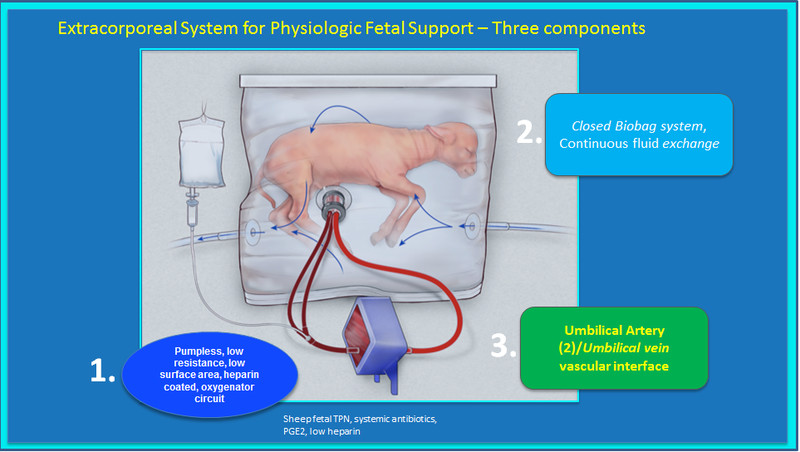
Flake and his colleagues published their results last Spring in the journal Nature Communications, saying that the Biobag functions the way a uterus does. It contains electrolyte fluid that mimics the amniotic fluid inside a placenta. It recreates the carbon dioxide exchange as well.
The main idea, of course, is to eventually use Biobags on humans, so the article emphasizes that parents of preemie babies must choose between aggressive medical measures or comfort care for end-of-life. (But keep in mind, Biobag technology would itself be an expensive medical and potentially aggressive medical measure.)
Verge continues:
Flake hopes the Biobag will improve the care options for extremely premature infants, who have “well documented, dismal outcomes,” he says. Prematurity is the leading cause of death for newborns. In the US, about 10 percent of babies are born prematurely — which means they were born before they reach 37 weeks of pregnancy. About 6 percent, or 30,000 of those births, are considered extremely premature, which means that they were born at or before the 28th week of pregnancy.
These infants require intensive support as they continue to develop outside their mothers’ bodies. The babies who survive delivery require mechanical ventilation, medications, and IVs that provide nutrition and fluids. If they make it out of the intensive care unit, many of these infants (between 20 to 50 percent of them) still suffer from a host of health conditions that arise from the stunted development of their organ systems.
[…]
One of the main challenges [for scientists over the years] was re-creating the intricate circulatory system that connects mom to fetus: the mom’s blood flows to the baby and back, exchanging oxygen for carbon dioxide. The blood needs to flow with just enough pressure, but an external pump can damage the baby’s heart.
To solve this problem, Flake and his colleagues created a pumpless circulatory system. They connected the fetus’s umbilical blood vessels to a new kind of oxygenator, and the blood moved smoothly through the system. Smoothly enough, in fact, that the baby’s heartbeat was sufficient to power blood flow without another pump.
[…]
Flake and his colleagues tested the setup for up to four weeks on eight fetal lambs that were 105 to 120 days into pregnancy — about equivalent to human infants at 22 to 24 weeks of gestation. After the four weeks were up, they were switched onto a regular ventilator like a premature baby in a NICU.
[…]
“I think it’s just an amazing thing to sit there and watch the fetus on this support acting like it normally acts in the womb… It’s a really awe-inspiring endeavor to be able to continue normal gestation outside of the mom.” [Flake said.]
Many of the lambs (sacrificial) were placed on ventilators and later euthanized, and their organs were allegedly healthy.
The team notes that preemie babies are vulnerable to infection in open-air, hospital incubators. The amniotic sac protected the lambs and the fluid exchange allowed for waste drainage, similar for an unborn baby. They also note that lambs aren’t human and these aren’t magic bullets. However, they envision human trials in the next few years.

Of course no one would object to any life-saving measures for pre-term babies, even if it conjures up images of embryonic pods from  The Matrix. But instead of constantly turning to biotech, A.I. and other external measures of supporting human life – we need to ask ourselves why there are so many pre-term babies to begin with. Why is there such a failure to thrive among babies in each passing generation? What medical procedures happen to pre-term babies – or formulas given to them – that could be affecting their ability to keep developing in hospital care? Why are mothers going into early labor?

To honestly and rigorously answer such questions may make incredibly expensive, life-saving technology, at least less necessary. We are no Luddites here, but such a dependency on biotech for life itself, carries its own risks down the road.
Please sound off below!

This article (“Don’t Call Me Mother,” Artificial Womb Grew Baby Sheep, Humans Next) was created by and appeared first at Natural Blaze. It can be reshared with attribution but MUST include link to homepage, bio, intact links and this message. 

favorite-velva-smallHeather Callaghan is a Health Mentor, Energy Healer, writer, speaker and food freedom advocate. She is the Editor and co-founder of NaturalBlaze as well as a certified Self-Referencing IITM Practitioner.
Get a nifty FREE eBook – Like at  Facebook, Twitter and Instagram.

Before You Eat That Breakfast Sandwich, Read This

,  Opinions expressed by Forbes Contributors are their own.
Consider the egg. Simple, delicious, and incredibly easy to prepare.
And yet, if you peruse the nutritional listings of America's favorite fast food restaurants, quite a different picture of the egg emerges -- and it's anything but simple.
I took a look at the published ingredient lists for six fast food mainstays that sell breakfast: McDonald's, Burger King, Chik-fil-A, Subway, Dunkin' Donuts, and Hardee's. I wanted to know just one thing: what's in their eggs?
I found several interesting ingredients, and one big surprise (at least it was surprising to me). I fully expected that McDonald's or Burger King would take the prize for the most unrecognizable ingredients, but neither one stacks up to the egg manipulation of Subway.  McDonald's still takes second prize, but as you'll see, it's the "Eat Fresh" folks whose list is easily the most baffling.
On the other end of the spectrum, Hardee's, Burger King and Dunkin' Donuts all come out looking decent with relatively short lists of ingredients. For the most part, they stick to nature's simple delight. Chik-fil-A sits in the middle of the pack with ordinary and dubious ingredients.

What's most intriguing is the comparison between lists. For example, Hardee's sells its customers eggs with only one preservative added, while Subway sells a concoction that includes eggs and "premium egg blend" containing at least ten preservatives and additives nowhere to be found on most of the other lists.
Let me stress that this information has been published by the companies and is there for all to see; just follow the links (you'll not find any secret formulas ahead).  The ingredient explanations below the lists were added by me and not included in the published list.

1. Subway
Egg Omelet Patty (Regular): Whole eggs, egg whites, water, nonfat dry milk, premium egg blend (isolated pea product, salt, citric acid, dextrose, guar gum, xanthan gum, extractive of spice, propylene glycol and not more than 2% calcium silicate and glycerin to prevent caking), soybean oil, butter alternative (liquid and hydrogenated soybean oil, salt, soy lecithin, natural and artificial flavors, beta carotene (color), TBHQ and citric acid added to protect flavor, dimethylpolysiloxane (antifoaming agent added), salt, beta-carotene (color).
A few words on the ingredients:
Propylene glycol, a solvent for food colors and flavorings, is also used in anti-freeze, to lubricate air-conditioner compressors, and in deodorant sticks.

Isolated pea product is a protein additive often used as a substitute for animal-derived protein.
Guar gum is a thickening agent.
Xanthan Gum is used to prevent oil separation.
Glycerin is a solvent that is found in soap, moisturizers and some brands of shaving cream.
TBHQ (tertiary butylhydroquinone) is used to preserve vegetable oils against oxidation, and can also be found in varnishes, lacquers, and perfumes.
dImethylpolysiloxane is a type of silicone used to prevent cooking oil from foaming after repeated uses. It’s also found in Silly Putty and many lubricants.
Calcium silicate is used to prevent caking and is also a popular antacid. In addition, it's a sealant used on roads, roofs and concrete.

Pasteurized whole eggs with sodium phosphate (preservative), citric acid and monosodium phosphate (added to preserve color), nisin preparation (preservative). Prepared with liquid margarine: Liquid soybean oil and hydrogenated cottonseed and soybean oils, water, partially hydrogenated soybean oil, salt, soy lecithin, mono-and diglycerides, sodium benzoate and potassium sorbate (preservatives), artificial flavor, citric acid, vitamin A palmitate, beta carotene (color).
A few words on the ingredients:
Mono and diglycerides are used to blend substances together that would otherwise not blend well (oil and water, for instance).
Potassium sorbate is a preservative that inhibits the growth of molds and yeasts. It's also used in personal care products as a replacement for the controversial chemical, paraben.
Cottonseed oil, when fully hydrogenated, is 94% saturated fat.
Whole egg, citric acid, butter oil (soybean oil, palm kernel oil, soy lecithin, natural and artificial flavor, TBHQ and citric acid added as preservatives, and artificial color).
A few words on the ingredients:
Palm kernel oil is roughly 50% saturated fat.
TBHQ (tertiary butylhydroquinone) is explained in the Subway section above.

Whole Eggs, whole milk, soy oil, water, modified foodstarch, salt, xanthan gum, white pepper, citric acid.
Whole eggs, skim milk (water, nonfat dry milk) vegetable oil (soy and/or corn oil), salt, xanthan gum, natural egg flavor, natural butter flavor.
Whole eggs, citric acid, 0.15% water added as carrier for citric acid (Citric acid added to preserve color).

Tuesday, January 30, 2018

Understanding Food Labels

Understanding Food Labels
By  Elisha McFarland
Guest Writer for Wake Up World
Understanding food labels can be a daunting task. Some terms are just marketing hype, while others are terms that are sanctioned by regulators, the United States  Department of Agriculture (USDA)  or Food & Drug Administration (FDA).
Food labels are managed in tandem by the USDA and the FDA. While the USDA handles meats, animal products, grains and produce, the FDA takes care of grocery items and many of the labels related to nutrition characteristics, like fat content, calories and vitamins.
Understanding your food labels is vital to making informed, healthy choices. So what do the terms on a food label actually mean?

Understanding Food Labels

“Natural”

In a short answer, “natural” doesn’t mean anything! The term “natural” has no FDA guideline behind it. The information copied directly from their site states the following:
“The FDA has not developed a definition for use of the term natural or its derivatives. However, the agency has not objected to the use of the term if the food does not contain added color, artificial flavors, or synthetic substances. [1] So while the foods can’t include synthetic ingredients, they can be heavily processed, such as animals raised with antibiotics and growth hormones. High fructose corn syrup (HFSC, sometimes referred to as corn sugar) for example is a natural substance, but producing it from raw corn requires a number of processing steps”.
Despite the label, “natural” foods do not necessarily  occur in nature.

“Fresh”

According to the fda.gov site, it means different things for different foods. So before you think fresh means something good, think again. According to Subpart F, Section 101.95 C, food manufacturers are not precluded from using the term fresh on their products even if they are using “approved” waxes or coatings, using post-harvest pesticides, applying mild chlorine or acid washes, or ionizing radiation. [2]

“Organic”

According to the USDA there are 3 categories for the term organic:
  • 100% organic:  Only foods that don’t contain any non-organic ingredients can be labelled as “100% organic”.
  • Organic:  Foods can be labelled simply as “organic” if they contain 95%+ organic ingredients, provided the other 5% does not include growth hormones.
  • Made with organic ingredients:  Foods that have at least 70% organically-produced ingredients can use the term “made with organic ingredients”. That’s right – up to 30% of the contents could be non-organic.
Click on link #3 (below) to read the USDA’s language on the department’s official  website. This is a great document to read, as there are also additional details and loopholes. For example, small farms that generate less than $5,000 annually from their organic offerings are exempt from certification requirements. They can use the term “organic” on their labels, but can’t use the USDA logo.
So for absolute certainty about your food, look for the categories named above AND look for the USDA official logo on the labelling as well.

“Made With…”

If you see this term on packages, it’s safe to assume that there is some misdirection going on with the labelling. If a label says “100% real fruit juice”, then its 100% percent juice (regardless of the process used to make it). But if it says “made with 100% fruit juice”, check the label to see what else may be included.

“Good Source Of…”, “Contains” and “Provides”

When foods claim to be a “good source” of a particular vitamin or nutrient, they must prove that they have at least 10 percent of the USDA’s recommended daily allowance. [4]
These terms may be used to indicate that the product contains a food or ingredient that meets the definition of “containing” or “providing” a level of nutrients, but may not be used to describe the entire product.

“High Source Of…”, “Rich In…” and “Excellent Source Of…”

When foods claim to be a “high source of” or “rich in” a particular vitamin or nutrient, they must prove that they have at least 20 percent of the USDA’s recommended daily allowance. [4]

“Low Fat”

“Low fat” is an FDA-regulated term that requires food bearing its label to have three or fewer grams of fat “per serving”.
Like “Good Source Of”, this  term may be used to indicate that the product contains a food or ingredient that meets the definition of “low fat”, but may not be used to describe the entire product.

“Light”

A “light” label is regulated by the FDA and can refer to the level of fat, calories or sodium in a product. If referring to fat, the “light” food must have at least 50 percent less fat than the “original” version of the product.
If the original food began with fewer than 50 percent of its calories derived from fat, the “light” label can refer to a reduction of a third or more calories, or a 50 percent (or greater) reduction in sodium.

“Cholesterol Free”

To be labelled “Cholesterol free”, foods must have fewer than two milligrams of cholesterol per serving, as well as fewer than two grams of saturated fat per serving.

“Multi-Grain”

Many people mistakenly assume that multi-grain means that whole grains were used in the product. This term simply means that more than one type of grain was used to make the product. By definition, the term “multi-grain” does not indicate or exclude any methods of processing.

“Lean”

The USDA requires meat that is labelled as “lean” to have fewer than 10 grams of fat, 4.5 grams of saturated fat, and 95 milligrams of cholesterol per 100 grams.
Of note, this regulation is “grandfathered” in, which means that meat products that have consistently been labelled as “lean” since before 1991 can retain the label, even if it doesn’t meet the current requirements specified above.

“Free Range”

For poultry, the term “free range” is enforced by the USDA and means that the animals were allowed access to the outside.  The USDA does not regulate the term “free range” for beef and other livestock.
USDA regulations on the term “free range” do not specify the quality or size of the outside range, nor the duration of time an animal must have access to the outside.  There have been proposals by the USDA  to regulate the labelling of products as “free range” in the U.S., however what currently constitutes raising an animal “free range” is entirely decided by the producer of that product. [5]

“Low Sodium”

Low sodium foods must have 140 or fewer milligrams of sodium per serving — that’s about 10 percent of the recommended daily allowance, per the 2010 Dietary Guidelines for Americans.

“Reduced Fat”

“Reduced fat” refers to a food that has less than half the fat content of its original version – whatever that content may be.
References:
Additional Sources:
About the author:
Alisha McFarlandAfter sixteen years of struggling with MCS (Multiple Chemical Sensitivity), Elisha recovered her health through alternative and natural healing methods. It was this experience that encouraged her to pursue an education in natural health, and she now has the following designations:  Doctor of Naturopathy, Master Herbalist, D.A. Homeopathy, Bachelor of Science in Holistic Nutrition, Certified Wholistic Rejuvenist  and  EFT-ADV.
Elisha is dedicated to helping others improve their quality of life through education opportunities she offers through her website and other projects. She has written over 160+ articles, as well as recipes and formulas for DIY projects. Her articles have appeared on (among others) GreenMedInfo, Natural News, Organic Consumers Association and Planet Thrive.